Sunday, May 22, 2016

Making Sense of Mathematics for Teaching Grades K-2

"We noticed you're a middle school teacher.  Which grade grade band would you prefer to review?"

This was the thoughtful question Solution Tree posed to me (Meg) when I inquired about their new book Making Sense of Mathematics for Teaching Grades K-2.  I admit, I understood their confusion.  Why would a middle school teacher be looking for a book on teaching kindergarten through second grade?  However, what they did not know was that this was my last year teaching middle school...for now, anyways.  I am taking a leap to move into an administrative role next school year, and as such, it is critical I continue learning as a part of my eternal quest to become a well-rounded educator.  Although I will be an assistant principal in a 5-8 grade middle school, I will be facilitating professional development for the K-8 grade math teachers in the district, hence my interest in learning more about early elementary mathematics.


The biggest strength of Making Sense of Mathematics for Teaching Grades K-2  is that it is anchored in research on best practices in mathematics teaching and learning.  The introduction establishes the need for teachers to facilitate a classroom where students engage in rich mathematical tasks to "empower students to develop a deep understanding of mathematics."  The eight Standards for Mathematical Practice must play a central role in these math classrooms, as does the teacher's ability to utilize a task-questioning-evidence (TQE) approach to planning meaningful instruction.

The book is broken down into chapters which focus on the various mathematical concepts covered in grades K-2:

  • Number Concepts and Place Value
  • Word Problem Structures
  • Addition and Subtraction Using Counting Strategies
  • Addition and Subtraction Using Grouping Strategies
  • Geometry
  • Measurement
Each chapter provides a vertical look at the topics as they progress from kindergarten through second grade, as well as a glimpse ahead to understand how the topics connect with future progressions in third grade and beyond.  There are frequent pauses in the writing as the reader is instructed to try some of the thought-provoking mathematics tasks via "do now" exercises.  The accompanying videos available via a QR code/URL provide a first hand look into a mathematics classroom so the reader can truly understand what these rich mathematics tasks and conversations look and sound like. 

Although the content itself is specific to grades K-2, the approach to teaching mathematics is transferrable to all grade levels.  I am looking forward to using some of the exercises from this book with my elementary math teachers this summer, as well as checking out the books for grades 3-5 and 6-8!


Tuesday, February 23, 2016

The Future is Now

Every year Jamie and I (Meg) look forward to attending Illinois Computing Educator's annual ICE conference.  This year at #ICE16 the theme is "Welcome to the Future".
Illinois Computing Educator's Conference

Given the theme this year, I decided to take a risk.  Coding and STEM activities are very hot topics right now in education, and as a math teacher, I admit I am inadequately educated in these areas.  So as the saying goes, "the future is now"...no time like the present to remedy the situation!

Game Creation Graphic Organizer
I began my day learning how to effectively harness the five components of game design to design my own video game in GameStar Mechanic.  There is a great ELA tie-in as well when students storyboard their video game first in order to ensure the story component of their video game is logical.  I whipped up this quick graphic organizer as an adaptation from Tanya Stahl's organizer she uses with her students at Hawthorne Middle School North.  I see a future where area, perimeter, and problem solving can be augmented with video game creation in math class...

Three-dimensional building, the perfect tie-in to any math unit on measurement, comes to life using programs like Lego Digital Designer, TinkerCad, and Sketchup.  123D Design and Tinker Play are downloadable iPad apps that have similar functions.  If your school is lucky enough to have a 3D printer, students will really love having the ability to see their creations come to life.  Another teacher in my session showed me examples of her students' 3D printing projects which included keychains, guitar picks, and earbud cord wraps.  (She commented that the earbud chord wraps require especially carefully measurements.)  I see a future where students' understandings of measurement, surface area, and scale drawing come to life before their eyes...

My first coding lesson
I was most excited about dipping my toes into the waters of coding.  Code.org is a well-known resource for coding, particularly since it is a huge promotor of Hour of Code.  Hour of Code argues that everyone can learn coding after this introductory hour to computer science and coding.  I really enjoyed learning the (very beginning) basics of Java with Code Combat, a site that teaches coding through engagement in a fantasy game.  In order to move my avatar, I had to enter the correct Java script.  There are also other coding language options on this site as well. Another workshop participant also shared Bootstrap World, which teaches coding through algebraic functions.  Someday (when I am a coding pro) I may be able to program a Sphero to run an obstacle course or write this entire blog post from the HTML page(!).  I see a future where my students and I are learning coding together, side by side...

I always tell my students that I am a life-long learner.  What better way to embrace the future than by modeling this mantra for my students, learning in tandem with my students, and exploring how we can be critical thinkers and problem solvers together?


(P.S.  I wrote the line of code that centered this embedded YouTube video--victory!)

Thursday, November 5, 2015

It Takes a Village

Building a community of readers takes an entire school.  It is important for students to see English teachers are not the only people in a school privy to enjoying a good book.  Today, a colleague and I swapped teaching assignments for the day.  It took a bit of finagling to make our schedules work, but we were able to make it happen.  Our goal was book talks!

Mr. Kramer is a sixth grade social studies teacher who is an avid reader.  He has a wonderful blog (Mr. Kramer's Book Blog).b Several of my seventh grade English students had him as a teacher last year, so they especially enjoyed having him come in to talk about books with them.  We worked it out so he could visit my English classroom for the last twenty-minutes of each class period to book talk, while I went to his classroom to teach a reading strategy to his sixth grade social studies students.  


As you watch the video clip, you’ll see my students jotting down the book title that Mr. Kramer is book talking on their Someday List.  A Someday List is simply a list of books students want to read in the future. Students keep these in their portfolios and know to update them any time we are doing teacher book talks and/or student book talks. These lists are a preventative measure to avoid hearing, “There are no books to read.”

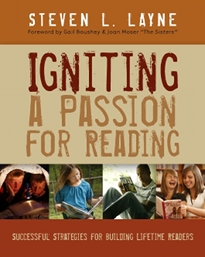
If you are interested in more
information on promoting reading,
this book is wonderful.
It includes a printable
copy of the Someday List.
At lunch time, I was on my way down to the teacher’s lounge when I heard a student calling my name. I turned around to see one of my students from my fourth hour class holding up a book. He wanted me to know he had just checked out a book Mr. Kramer had recommended. Score! Seriously, these types of moments are what teachers live for, right?

Today, may have been a little stressful running between two classrooms, but I love the fact that "my" students became "our" students today. A big thank you to Mr. Kramer for being willing to share books with my classroom.  It was worth the extra effort!

Think about the people you could invite into your classroom to share their love of reading. I know you see Mr. Kramer with a slideshow presentation in the video clip, but you don't have to go that route. You can simply have your guest speaker hold up his/her favorite book and talk about it. And, perhaps English teachers we need to think about maybe going into a science class to promote science fiction and/or a history class to promote historical fiction. Let's work together to build a community of readers!

Friday, October 16, 2015

Read-Alouds: Little Kids Can't Have All the Fun

Presenter selfie at AMLE
I (Meg) just returned from Columbus, Ohio, where I presented at AMLE's national conference with my great friend Becki.  We have been close friends since our undergrad years at Miami University where we were both middle childhood education majors and cheerleaders.  Though we moved to different states after graduating, we continue to remain close friends.  A constant part of our ongoing conversations always revolves around what we do in our respective math classrooms.  It has always been clear that we mutually value literacy integration in our math classes, so it was only natural that we decided to share our brilliant ideas with the rest of the middle school world.  Our presentation was appropriately titled "Math + Literacy = Rich Learning".  As we crafted our presentation on integrating literacy activities into our math classrooms, we immediately decided that our math read-alouds must be a highlight in our presentation.

In Dr. Steven Layne's most recent book In Defense of Read-Aloud, he delineates so many of the reasons read-alouds have a critical home in any classroom.  In addition to being plain old fun for students, read-alouds in a math classroom are the perfect way to build background knowledge and activate students' schema.  Using a picture book or a portion of a novel for a read-aloud provides students the opportunity to encounter a math concept in a non-threatening context and allows them to make connections between math and a variety of real life events.  Becki and I compiled a lengthy list of some of our favorite math-related books for the conference, so feel free to peruse and start using some of these books in your own classroom.
Mrs. Knapik captivating the crowd on read-aloud Monday

While I love using a read-aloud to launch a new lesson, I have started the new tradition of "Read Aloud Mondays" in my math classroom.  Mondays are difficult days for both teachers and students alike.  Starting class on a Monday with a five minute read-aloud has become the perfect way to ease all of us into another week of academic rigor by focusing our minds on mathematics.  The students are always engaged while I read, and by using a simple turn-and-talk or quick write prompt, the students are talking about or writing about math within minutes of entering the classroom.

Mrs. Knapik's "all math" bookshelf

In addition to reading aloud, I also make it a point to proudly display all my math-related books on their very own *special* bookshelf at the front of my classroom.  This bookshelf highlights to the students that reading about math is valued in our classroom.  My students clearly understand that math and literacy go hand-in-hand; they are not separate events.  Since I let my students check books out from my classroom library, keeping the math-related books on a shelf at the front of the room helps make these books pretty popular selections.

I also highlight *special* books I have in my classroom library.  These are books I have gotten signed by the author or books written by an author I have actually met.  I use a big "Look!" sign and arrow to direct my students' attention to these special books around my classroom.  When I am lucky enough to meet an author, I try to get a photograph with him/her and then tape the photograph inside the book's cover.  It makes the kids think I'm pretty cool!
One of Mrs. Knapik's *special* books!

Some neigh-sayers may ask, "Wait, you read aloud to your middle schoolers?  Don't they think that is kind of babysish?"

The answer is a resounding, "No!"  My middle school students, whether eighth graders or sixth graders, always LOVE being read to!  Never underestimate the power of a read-aloud.  ;)


Friday, October 2, 2015

Higher Level Thinking + Technology = Student Engagement

Helllllllo, world!  After our end-of-summer/back-to-school hiatus, we are back in action on the blog! If you are like us, the summer is full of exciting travel and professional development.  Come mid-August, we are ready (for the most part) to welcome a new group of students into our classrooms. Now that we have gotten to know our students, established our classroom procedures, and are in the swing of things at school, we are ready to turn our attention back to sharing our ideas with other educators and continuing to develop ourselves as life-long-learners.

Changes in Bloom's Taxonomy to reflect 21st century learning
Every year, the Illinois Reading Council hosts its annual conference to bring together passionate educators from all over the state and country to share literacy best practices.  This year, the two of us created a new presentation with our colleague Kirby to focus on how we integrate higher level thinking tasks from the top of Bloom's Taxonomy with technology in order to engage students and enrich their learning experience.  Since Bloom's Taxonomy was revised in 2001 to reflect 21st century changes in learning, we focused on analyzing, evaluating, and creating within the contexts of our middle school English and math classrooms.

Meg, Jamie, and Kirby are ready to present at IRC 2015
Kirby, a sixth grade English teacher, highlighted how she uses Newsela to find quality nonfiction texts for her students.  Her students analyze the part-to-whole relationship of the text structure.  Using the Notability app on their iPads allows them to annotate to help them with this process.  They then evaluate how an author crafts his/her writing to communicate information before creating their own online article via KidBlog or creating their own "how to" video using iMovie.

Jamie, who is a seventh grade English teacher, has her students analyze mentor texts in the form of blog posts.  In breaking down these mentor texts, students are able to see the parts of a quality blog post which ultimately prepare them to create their own blog posts on Kidblog.  Her students also evaluate book reviews on GoodReads and then use these book reviews as mentor texts prior to creating their own book reviews on GoodReads and/or book trailers using Animoto.
Great turn out for our session!
I (Meg), the math teacher of the trio, have my students use Noteability to help them document their hands-on experiences in class as they analyze part-to-whole relationships between numbers, for example how the side length of a cube relates to its volume and the math term "cubing a number". They can capture photographs of their manipulatives, write text to caption their images, and record audio as they turn-and-talk to a neighbor to summarize their analysis.  Students are able to evaluate the best problem solving strategies as they record screencasts of their math strategies using the Explain Everything app. Students are able to create math picture books using the Book Creator app to integrate the writing process with their math knowledge.

How do you use higher level thinking tasks in your classroom?  We would love to hear your ideas!

Tuesday, July 14, 2015

Getting More Out of Your Summer


Recently, I (Jamie) was afforded the privilege of hearing Frank Serafini present at the Literacy in Motion Conference at Judson University in Elgin, Illinois.  At the beginning of his presentation he made a comment about teachers that made me chuckle.  I am paraphrasing here, but he said something along the lines of teachers needing to live our lives outside of the classroom, so we can be more interesting for our students. We all laughed, but he was right!


Our Camping Van
With that in mind, I just returned from a two week RVing trip with my husband.  Oh, it was interesting!  But, that is too long of a story.  I do want to write about a fantastic place I visited that I can’t wait to tell my students about. My favorite stop on our road trip was The Hopewell Rocks in New Brunswick Canada.  I am not a science teacher, but I will use these fantastic rocks in the teaching of my English class. 

E.T.
The entire time I was  there, I kept thinking of all the potential writing possibilities.  At first, I was thinking only non-fiction, but then my creative juices kicked in to gear.  There was a rock called Diamond rock.  I started to think of a story along the lines of a Greek god story.  One in which a god gives his girlfriend a giant diamond ring, but she does not accept and throws the ring aside.  There it lies in the Bay of Fundy.
Another rock was called the E.T. (extraterrestrial) rock.  If you look real close, you can make out a face that looks alien, right? Think of the possibilities!  Students writing about how the rock came from another planet.  Perhaps, the rock comes to life at night and roams the Earth collecting information on our planet.


It wasn't just about the rocks.  The coolest part is the ability to walk on the ocean floor at low tide.  I can't wait to educate my students about the tides, the geology, and the animals that inhabit the area.  I hope to use my experiences to inspire them to tell stories about their own life experiences. 
 
 
My husband and I also visited the home/museum of AlexanderGraham Bell located in Baddeck Nova Scotia.  If you’re like me, you immediately think telephone.  However, Bell was an inventor of many things.  He began working with the deaf and trying to help them communicate. Even more interesting, he actually successfully invented the first powered airplane to fly in Canada in 1909.  And, as if this was not enough, he worked with a man named Baldwin on something called the hydrofoil (HD-4) the fastest boat in the world in 1914.


So, how can I weave this into my English curriculum?  I took a lot of photos of different things displayed in the museum and hope to use them as story starters.  But, I also thought I could use the fact that I typecasted Bell as the inventor of the telephone--nothing else.  I thought I could prompt my students to read non-fiction about something they have a preconceived notion about or something they simply want to investigate more.

Bell Experimenting with Flight


Indeed, Frank Serafini was correct. Getting out of my classroom does make me a more interesting teacher.  I can’t wait to share stories of my summer experiences with my students.  When you share a part of yourself with your students, you move beyond the curriculum.  You make connections with kids and show them all that life has to offer.  The more I learn, the more I can teach my students.  I love new experiences and learning new things.  Traveling always satisfies those two passions for me.   There is still enough summer left to build memories to bring back to your own classrooms.  Get out there and enjoy life!


Monday, May 11, 2015

"Connecting the Dots" between the Coordinate Plane and the Real World

Although we have been a bit MIA from the blog the last few months, we have been fully present in our classrooms.  Both of us have been working tirelessly to keep our middle school students engaged despite the numerous days of testing that come along with the spring season.

Sometimes, some of my (Meg's) favorite and most successful classroom activities are those that require no technology at all...a good, old fashioned, back-to-basics type of activity...and then we will follow up with a little blogging, of course.  ;)

The coordinate plane
on our classroom floor
As my sixth graders and I began our exploration of the coordinate plane, our classroom floor was just begging to get involved.  Our classroom floor is comprised of square foot tiles which create the perfect grid.  All I had to do was lay down an x and y axis with my trusty red duct tape, and we were ready to go!  With the tables moved off to the side of the room, the students of course were immediately intrigued as they walked into class.


"Where do we sit?"
"Why is that stuff on the floor?"
"Wait, is this like Battleship?"

Using the coordinate plane
to create polygons
The kids then became a part of a kinesthetic lesson, moving around the coordinate plane from quadrant to quadrant, and then taking on the role of specific ordered pairs based on their exact location on the floor.  Conversations were had about reflecting points about the x and y axis and why (0,0) is called the origin (gotta get that academic vocabulary in there, too!).  Our favorite part of the activity was when a few student volunteers stood at various points about the coordinate plane and held the same piece of yarn to form a polygon.  Simultaneously, the remaining students were plotting the same ordered pairs on their own coordinate planes.  The students were able to "connect the dots" to identify the polygon, which ultimately led to conversations about classifying polygons, perimeter and area.  (Don't you just love when you can connect multiple math topics into one conversation?!)  To end this class, we sent out a class Tweet to share with the world what we learned.

The next few days, we did some more kinesthetic coordinate plane activities to start each class, but we spent the majority of our time working with the pictorial representation of the coordinate plane.  The students also did some research on how coordinate planes can be useful in real life and blogged about their findings.  Many students made connections in their blog posts between the coordinate plane and the game Battleship and using maps.  However there were other interesting real-world connections I would not have thought of myself, like this student who discovered how artists can use coordinate planes and this student who remembered a video game designer who had spoken to her elementary school and explained how coordinate planes were used in his job.

Not only did this lesson allow the students to get up and move, but the blogging was a great way to integrate literacy into our math classroom.  The students could "connect the dots" between the coordinate plane in math class and how it is used in real life.

What are some of your most successful kinesthetic lessons?  How have you recently used blogging with your students?  We always love to hear from you!

Thursday, February 12, 2015

Tackling Persuasive Writing Via Our Blogs


Venturing out of our comfort zones, my students and I are tackling our next blog post.  Our goal is to make you (the reader) see our blogging topic in a new light and to perhaps make you take action.


Anchor Chart
We started the blogging process back in October with a discussion about the different types of writing and/or purposes for writing.  A student made anchor chart hangs in our classroom as evidence of our learning.  Before each blog post, I encourage students to decide on their purpose for writing their next post.  Persuasive blog posts seem to be my students least favorite type of writing.  Therefore, we are embarking on this journey together to write a persuasive post.

Before we began our drafting, we revisited the characteristics of persuasive writing.  During a 10 minute mini-lesson at the beginning of writers workshop, I had students reflect on their prior knowledge to build a web. This was a student led activity as you can see in the picture.
When we finished with activating our prior knowledge, we began drafting our persuasive posts.  As the students began their drafting, they could watch me drafting my own post. Yes, the one you are currently reading!

Student Led Mini-Lesson

Even though we are writing blog posts, writers workshop has stayed the same in my classroom.  Through mini-lessons I am still teaching my students about grammar, sentence variety, attention grabbers, etc.  We work on drafting, revising, editing, and of course publishing.  The only thing that has changed is the fact I have embraced technology to allow for creativity and engagement.  Recently, I heard Ellin Keene speak at WSRA. She talked a lot about the importance of student engagement.  Her presentation reinforced what I've been doing in my classroom this year with blogging.   As I look out at my students right now, I see my students in various stages of the writing of their persuasive blog posts.  Some students are brainstorming with others at their tables.  Some are typing their drafts in a Google doc. Some are researching their topic for information or inspiration.  They are ALL engaged.  A smile sneaks across my face as I snap a few images of them working.  It is a teacher's dream to see kids intellectually and emotionally engaged in their writing.   My students are creating!  They're at the top of Bloom's Taxonmy.
Many of my students love to work on the carpet--not at their desks.
So, why should teachers blog with their students? I recently posed this question to my students to gain some valuable feedback.  I was pleasantly surprised by their responses.

One of the most popular student responses was the fact that they enjoy the self-selection of topic. Many students also commented on liking the fact that they could add images, links, and videos to enhance their writing.  Another popular response was made about enjoying reading each other's blogs and making comments to one another.  Students felt like they were getting to know their peers better. And, they felt like they were learning a lot about topics that they did not know much about.  Listen below to  Leah's thoughts on blogging.  She writes a DIY blog, and has won a Bloggy award for best blog in my English classroom.


Wednesday, February 4, 2015

#MathSelfies

I know I have mentioned before that the sixth graders at our school are piloting one-to-one iPads this year.  As a result, I am constantly looking for new ways to help my students bring math to life using the iPad, both in and outside the classroom.

If you have contact with adolescents, I am sure you have come to realize that selfies are all the rage right now.  (True story: the sixth grade teachers started to see our students experience storage shortage on their iPads due to the number of photographs they had taken/stored on their iPads!)  I have had my students take pictures of real life math they have seen before on their iPads to use as support for blog posts, but I had never before issued a selfie request...so I thought maybe it was time I did.

Thank you to Erin and her mother for sharing their #mathselfie!
In addition to incorporating students' interests (ahem, selfies), there has been research for years that highlights the importance of parental involvement in education.  I thought our current unit on rates provided the perfect opportunity to include parents in the learning process.  The task I gave my students was to find a real-life advertisement (authentic learning task) and explain to their parent/grandparent/babysitter/guardian (an important adult) why this advertisement shows an example of a rate.  I also sent an email blast to parents/guardians to make them aware of the assignment and provided them with pointers for ensuring their children were on-target with their explanations, as well as some questions they could pose to further probe their children's thinking.  In order to prove this conversation occurred, the students were supposed to take a math selfie with their guardian and the real-life rate advertisement.

Thank you to Alex and his mother for sharing their #mathselfie!
When we gathered back together in class, we displayed the math selfies on the iPads and did a gallery walk to view the different photographs.  During the gallery walk, students recorded observations (science connection!) on a T-chart to note similarities and differences seen between the various rates.  We then proceeded to share our observations to create a class list, and we made connections from this list back to the conversations the students had with their guardians about the rates they found in these advertisements.  Not only did the kids have fun with the selfie assignment, this provided a great opportunity for dialogue focused on content-specific vocabulary as it relates to the real world.  To me, that's a win!

What authentic learning tasks have you tried lately with your students?  How have you provided students with the opportunity to bring their interests into the classroom?  We would love to hear your ideas, too!

Friday, November 7, 2014

Turn Them Loose and Let Them Blog


Blogging continues to be one of my (Jamie's) favorite ways to integrate technology into my English classroom.   This year I am exploring using blogs to provide my students with the opportunity to write about a topic of personal interest.  There is much research out there to support allowing students to choose freely.  In the words of Lucy Calkins, “Choice matters. Not a little, but a lot.”  

What do you like to do in your free time?
 What type of books do you like to read?
What kind of foods do you like to eat?


To kick off blogging this year, we did a lot of brainstorming about personal interests.  I started with a simple stick figure.  Students were asked questions, and then they were given a few minutes to respond with corresponding thoughts/ideas on their stick man/woman.

The center represents things we love the most.


A few days later, we drew a heart map in our journals to provide us with a space to write all the things we are passionate about.  This activity is taken from Nancy Atwell’s Lesson that Change Writers.

When I felt my students had cultivated enough ideas, we began discussing blogs.  In our book Literacy Lessons for a Digital World, Meg and I suggest having your students view the Common Craft video on blogging to introduce any blogging lesson.  The video provides a clear explanation of what a blog is and how it is used.  Before blogging, I also shared mentor text.  My mentor text was of course a blog.  I showed them our JMLiteracy blog. We discussed my interest in ed-tech, and why I would choose that topic to blog about with Mrs. Knapik.  Modeling for your students is a key component to good teaching.  By showing my students that I am a blogger, I am showing kids that I practice what I “preach”. 

My students were then assigned the task of drafting their first blog post.  Their goal was to write an introductory post about themselves and their blog topic.  We took our blog post through the writing process, and then we published to our classroom blog.   The kids were really excited because they knew their audience was beyond the scope of just the teacher’s eyes.

Wait!  It gets even more exciting.  After posting, I took blogging one step further.  I collaborated with another English teacher in my building to provide an audience for my students’ blogs.  Mrs. Horrigan’s sixth graders read my seventh graders’ blog posts and left comments on their blogs.  When my students saw that comments were left on their blogs by other students, the bar was further raised.  My students immediately began comparing who got more comments, and I used this as a teachable moment.  Why did some posts get read more than others?  We went through the blogging checklist (scroll to bottom of this link to download checklist), and we discussed the characteristics of the blogs with the most traffic.

Take a look at a few of my students introductory blog posts and feel free to leave a comment.

Fashion Blog
DIY Blog
Reading Blog
Free Time Blog
Nature Blog

Monday, November 3, 2014

QR Codes Transform Our Math Classroom

If you have read our blog before, you will remember when Jamie wrote her exciting post on engaging with QR codes at the Henry Ford Museum.  This year I (Meg) am teaching sixth grade math again, and we are piloting one-to-one iPads.  Having a brand new device in my classroom was both exciting and challenging at the beginning of the school year.  Some of my favorite web-based activities were difficult to do on the iPad.  For example, I could no longer have my students create a visual math glossary using tables in Google Docs like they did in the past because the Google Doc iPad app does not allow users to create tables or insert images.  Instead, I needed to look through a new lens when I was designing tech-related activities since the capabilities of the iPad are vastly different than those of a netbook, our previous one-to-one device.

Math Super Stars QR Code Bulletin Board
One unique capability an iPad offers is the ability to scan QR, or "Quick Response", codes.  I definitely wanted to harness the potential of this tool in some way in my math classroom.  One of the most common uses for QR codes in the classroom is to use them in conjunction with book trailers.  Students (or teachers) create book trailers, and then a QR code is created and taped onto a book so that when it is scanned the person can view a book trailer for that particular book.  As a math teacher, this idea wouldn't work for my every day use.  However I loved the idea of using QR codes to connect to student-created work.  I also found that my "Math Super Stars" wall was still empty after the first month of school since the students were doing less work on paper than they used to.  My idea started to form...

Close Up View of QR Codes on My
Math Super Stars Bulletin Board
My students had some experience using the  Educreations iPad app to make math video tutorials to explain their thinking.  Sometimes they would do this in relation to correcting an error made on a formative assessment, and other times I would specifically assign they use the app to explain their strategy for solving a real-world problem related to our learning objectives.  Once I figured out that each Educreations video had a unique hyperlink, I know my QR code dreams could become a reality.  I launched my Math Super Stars bulletin board with a brand new purpose: students whose videos not only showed correct problem solving but also included clear explanations rich with math vocabulary would be featured on the Math Super Stars board.  In the past month, this board has become a way to showcase and honor exemplary problem solving, and it is also a useful resource for students that is always accessible in my classroom.  Before summative assessments, I now have students who choose to spend time during advisory scanning these QR codes as a means of clarifying their understanding in review for the summative assessment.  I know I have just scratched the surface of the potential QR codes have in my classroom, but I would say my first experiment has been a success!

Have any of you used QR codes with success in your classrooms?  We would love to hear your ideas, too!

Monday, October 13, 2014

A New Twist on an Old Favorite: Traveling Concept Maps

The other night I was watching a video lesson from Teaching Channel with my grad school class.  Our class is called "Supervision of Learning Environments", and the purpose in watching this video was for us to determine whether or not this particular teacher revised her teaching strategy after a lesson was not quite as successful as she had hoped.  Sarah Wessling, the teacher in the video (who is stellar, by the way!), certainly did adapt her plan for the class, and I loved her new idea so much that I adapted the idea for my sixth grade math class!

Sarah had her students use what she called "traveling concept webs" in her high school English class to have the students generate ideas related to The Crucible and connect them to modern day themes.  I have used concept maps before, but never had I had them "travel".  I love the collaborative aspect to this idea, and I envisioned this as useful way for my students to review for their chapter one summative assessment.
Plus, I always love integrating literacy into math...cha-ching!

Each of my six small groups of students had a piece of butcher paper with a math topic in a center circle, forming the hub of the web.  The six topics on our concept webs were Number Lines, Prime Factorization, GCF, LCM, Squares & Square Roots, Cubes & Cubed Roots.  Each group had three minutes to add supporting details to the web related to the definition of the concept, helpful strategies, and example problems using a variety of methods.  Once the timer sounded to end the three minutes, the students rotated one group clockwise (It was also great to have the kids up and moving a bit).  This time the directions were slightly different.  The students needed to first read everything that was already on the concept map, correcting anything they felt was not accurate.  After doing so, they could then continue adding new information.  Once again the timer sounded after three minutes, and the students rotated.  The third time around, the students were directed to read and correct any information, and they were issued an additional challenge to create a more difficult example than the ones previously listed.  The final three minute buzzer sounded, and students returned to their seats.  The activity culminated in a gallery walk where the students had the opportunity to quietly look at all six concept webs.  On post-it notes, students wrote and posted questions remaining on each topic's concept web.  These questions not only were formative in nature, allowing me to see where there were still some misconceptions and confusion, but they were also wonderful collaborative conversation starters.  I had the students lead the follow up discussion themselves, answering each other's questions using appropriate math vocabulary and our class experiences as support for their answers.  I was truly impressed with how articulate many of my students were, and I always love seeing them help each other learn.  So two thumbs up for this activity!  I'm keeping traveling concept maps in my arsenal of secret weapons for use in the future as well.  :)


Tuesday, September 30, 2014

What Do We Have to Fear?

Blogging Challenge Day 30 (Last Day!)

What would you do (as a teacher) if you weren't afraid?

Jamie- If I weren't afraid, I would probably leave my job as a classroom teacher to start my own
educational consulting business.  I'd also like to be a full time writer.  What stops me?  My students! 
I love being in the classroom surround by the enthusiasm only kids can possess.  I love to see the light bulbs go off when they truly understand a concept.  I love nurturing them as readers and writers. I love to challenge them to do their best.  I like helping them down the path of becoming an adult.  It is a great privilege and honor to have the opportunity to touch the lives of our future.   Teaching brings me the greatest joy, and I am afraid to walk away from it to follow my other dreams.  Perhaps the right opportunity will present itself one day.  Right now, being in the classroom is where I belong!
Meg- If I weren't afraid of meeting deadlines, the impending PARCC test, and the opinions of
parents, I would definitely spend all day every day examining all of the *cool* real-life math that is out there.  Now this doesn't mean that I don't do real-life math.  It just means that I definitely follow more of a guided path based on the CCSS and the collaborative plans the other math teachers and I create together.  I also would never be afraid to try a new project with my students because I wouldn't be afraid of running out of time.  Time always seems to be the biggest issue when a risk I take in the classroom goes sour.  I have just "wasted" precious time that I cannot get back.  I try to keep my adventurous, creative spirit in mind as I plan to allow for some of my risk-taking and plain old FUN real life math to wiggle its way into my classroom.  I just had to make sure I am balancing it with all of the other standards I am actually "supposed" to be doing as well.  :)

Monday, September 29, 2014

Our Evolution as Teachers

Blogging Challenge Day 29

How have you changed as an educator since you first started?

Jamie-The longer I teach the more I understand the middle school student.  I've done a lot of reading about the development of the brain and the role hormones play.  I think middle school teachers sometimes forget how young middle school students really are in 6th-8th grades.  Seriously, they've only been on this planet for 12-14 years--they're babies!  With that said, I think that I have become more understanding and more patient.  This age group needs a lot of help with executive functioning skills.  So, I spend a great deal of time in my classroom talking them through how to break down assignments, how to write their homework down, and how to advocate for themselves when they need assistants.  I take nothing for granted!  Secondly, I have really embraced the whole concept of formative and summative assessments.  I take the time to use formative assessments to gauge if I need to slow down or continue forward.  When I first started teaching, I was more focused on getting through the curriculum versus whether or not my students were really learning anything.  I am sure there are other things that have changed, but I feel these two things are the most important and have impacted my teaching the most.
Meg- Can you say formative assessment?!  I have truly evolved in my teaching practice over the course of my nine year career.  Without a doubt, the number one way in which I have changed is by really focusing on creating effective formative assessments and providing timely, specific, and targeted feedback to my students.  I love the analogy of formative assessment being like taking a trip to the doctor as opposed to having an autopsy done after it is "too late".  I tell my kids all the time that the formative assessments allow me to take their learning "temperature" so I can diagnose their learning problems and address any confusion as early as possible.  If I don't utilize formative assessment effectively to inform my instruction and interventions, the students will fail their summative assessments (and then it's "too late" for them!).  I also think more deeply about the types of feedback with which I provide my students so they will really be able to improve and grow.  Take a look at this chapter from Susan Brookhart's book How to Give Effective Feedback to Your Students for some clear examples and ideas of providing timely and effective feedback to students.

Finally, when in doubt, look to Rick Wormelli for advice on utilizing formative and summative assessments.  The video below provides a basic explanation of how to meaningfully use formative and summative assessments in a differentiated classroom.

Sunday, September 28, 2014

Technology in the Driver's Seat?

Blogging Challenge Day 28

Should technology drive curriculum, or vice versa?

Meg and Jamie:  Technology is a tool.  It should definitely not drive curriculum.  That is like asking if a pens, pencils, and paper should drive curriculum--absolutely not!  With that said, we believe that you cannot ignore the fact that technology has changed the way kids learn.  We live in a world where information is at our fingertips.  The presence of technology in education should make us ask new questions about our curriculum.  We love this quote from Will Richardson found in a book titled 21st Century Skills: Rethinking How Students Learn, " We now officially live in a world where even twelve-year-olds can create their own global classrooms around the things about which they are most passionate."  Richardson continues by asking:
  • What should classrooms be when we connect with other teachers and learners around the world?
  • What is the best role for teachers when knowledge is distributed widely in these networks?
  • And, most importantly, how do we reframe our own personal learning experiences as educators and as people in light of all these shifts?
Will Richardson Skyping with our LIT505 class
These questions can be great guides for educators as they contemplate how to best integrate technology into their classrooms in meaningful ways.  In fact we were lucky enough to Skype with Will Richardson this summer during the grad class we co-teach at Judson University.  We love how he helped us to convey the message that educators need to be thinking about how technology has changed the learner as well as how it has changed our occupation.

Take a few minutes (4 minutes and 53 seconds, to be exact) to watch the video below from Edutopia about technology integration.

Saturday, September 27, 2014

Time to Rejuvenate

Blogging Challenge Day 27
What role do weekends and holidays play in your teaching?
Meg- For me, weekends and holidays are a chance to play catch-up.  I grade all those papers that I wasn't able to squeeze into the work week, I create resources to use with my students in the upcoming week, and I take some time to reflect on my recent successes and failures in the classroom so I can continue to work towards making my class the best place possible for student learning.  The weekends and holidays also provide me a much-needed chance to spend time with my husband, catch up with friends, exercise, and SLEEP!  Waking up at 5:22 AM (fun fact: I always set my alarm for even times that do not end in a zero) definitely takes a toll on me, and getting a good 8-9 hours of sleep for a couple nights makes me sane again.  I have found that I am a better teacher when I have a healthy work-life balance.  My patience lasts longer and I am more creative.  With that being said, I am off to the gym on this lovely Saturday morning to jump start my day!

Jamie-I have just returned home from a beautiful fall day spent watching my niece play softball. So, weekends are definitely set aside for family.  I try to reserve a set amount of time for work on the weekends.  If I work (grade papers) on Saturday, then Sunday is an off day or vice versa.  If I don't take time off, I have less patience for my students when I return to work on Monday.  There are times on the weekends, before my husband wakes, early in the morning where you'll catch me reading educational blog sites, perusing new tech tools, and/or looking at websites connected to my teaching.  It is also a time for catching up with my reading.  I have to be a role model for my students on Monday morning for Reading Weekend Update.  So, I have to get some reading done in my independent reading book.  In fact, I just finished Doll Bones by Holly Black this morning.  It was so good!  My students could hardly wait for me to finish because they want it next.  The waiting list for this book is long.  Think I might need to buy another copy!  After typing this blog, I am headed outside to enjoy a glass of iced tea and The Book Whisper by Donalyn Miller.  This is a must read for reading and/or English teachers.  I am loving it, and I am only on page 50.  

Fave Go-To-Sites

Blogging Challenge Day 26

What are your three favorite go-to sites for help/tips/resources in your teaching?

Jamie:  My favorite go-to site  is definitely a blog written by Richard Byrne called Free Technology for Teachers.  The purpose of the blog is to share free resources for teachers to use in their classrooms.  At times, Mr. Byrne hosts guest bloggers and conducts webinars.  If you are looking for inspiration on how to use tech in your classroom, this is the blog for you.  It is excellent! My second favorite place to visit on the web is ReadWriteThink .  It is site sponsored by both the IRA (International Reading Associations) and NCTE (The National Council of Teachers of English).  It is full of free resources for language arts teachers including lesson plans. I love that you can search by grade level and/or a topic.  Third, I am absolutely addicted to Pinterest.  I have found numerous education blogs to follow through Pinterest as well as finding images of things I can recreate in my own classroom.  Before school started this year, I found fun activities to use to get to know my students, helpful ideas for creating an interactive notebook, and classroom design--think setting up a reading corner.   Love Pinterest!
Meg:  I also think Free Technology for Teachers is a wonderful resource; thank you, Richard Byrne!  For math resources, the NCTM (National Council of Math) Illuminations site provides a plethora of lesson ideas which can be searched by grade level and math strand.  The National Library of Virtual Manipulatives is a fabulous web resource to use to help visual learners understand math concepts.  In fact, I just used their factor tree manipulative with my students yesterday!  Finally, can I say Twitter again?  I know we just wrote about it the other day, but seriously the ideas, resources, and posts shared on Twitter are the catalyst for some wonderful changes I have made to my teaching.

Thursday, September 25, 2014

Ideal Colloboration

Blogging Challenge Day 25

The ideal collaboration between students--what would it look like?

Jamie- Too funny that this would be the prompt today.  During advisory today, I experienced collaboration at its best.  Yes, I'd like to think this collaboration is a direct result of all the modeling I've provided on how to work collaboratively thus far in the school year.  However, I think it may have been a pity act.  My students felt sorry for me, so they came to my aid.

I was helping a student with his math test corrections.  He was writing algebraic expressions.  I led him through definitions of the math vocabulary and writing the mathematical symbols that went with each math  vocabulary word.   Then I hit a road block.  I couldn't decide the placement of the unknown number, and the young man I was helping didn't know.  So, I picked up the phone to call the math teacher.  (Again modeling for my students what to do when you don't know the answer.) Only I dialed the wrong number and realized I had an outdated phone directory.  This is when two other young men came to the rescue.
There we were, all four of us,  pouring over this math test together. We read the problem aloud. We discussed the possibilities with one another.  We debated with each other over the right approach.  In the end, we figured it out.  It took all four of us to get the answer.  There were high fives all around. In that moment, I couldn't have been prouder of the collaboration my students demonstrated.

PS... I know we did it right because I asked one of the smartest kids in my class to see his test--ha! ha!

Meg- Collaboration is one of my favorite parts of teaching.  I get many of my best ideas while collaborating with other teachers, and I regularly share this insight with my students.  True collaboration between students occurs when all members are actively participating and contributing to the ideas and products being created.  Jamie will laugh because I like to use this analogy when we present, but true collaboration is like a comforter.  You cannot tell where all the different pieces come together.  We want to avoid a patchwork quilt model for collaboration, where it is apparent where one student's work stops and another student's work starts.  The first time I had my students create math video tutorials using Educreations I had them work in small groups.  The students created their scripts together, shared in the making of the slides, and each had a speaking role on the video.  Every student was accountable for being a part of each stage in the process.  Not only were the students beaming with pride, I was too!